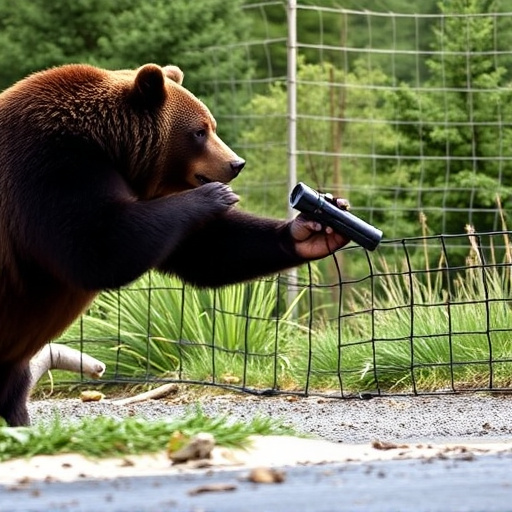
Bear pepper spray, effective against aggressive bears due to its capsaicin ingredient, has a range influenced by various factors from 20 to 30 feet (6-9 meters), maximized in ideal conditions. Understanding this range is crucial for safety in bear habitats, as the spray's effectiveness diminishes beyond 7 meters, making it most successful within close range for hikers and campers. While powerful, bear pepper spray isn't a guaranteed solution, requiring proper usage techniques, manufacturer instructions, and additional defensive strategies. Its legal and ethical implications, with varying regulations and debates about humaneness and misuse, underscore the need for responsible usage and informed decisions.
“Uncover the power of bear pepper spray as a crucial tool for self-defense in encounters with aggressive bears. This comprehensive guide explores the effective range of this potent deterrent, revealing the science behind its operation and the factors that determine its reach.
From composition to real-world scenarios, we dissect what makes bear spray a game-changer. Learn about safety protocols, legal considerations, and best practices when carrying this essential survival tool. Understand how far bear pepper spray can protect you in various environments.”
- Understanding Bear Spray: Composition and Mechanism
- Factors Influencing Bear Spray Range
- Effectiveness in Different Scenarios
- Safety Considerations and Best Practices
- Legal and Ethical Implications of Using Bear Pepper Spray
Understanding Bear Spray: Composition and Mechanism
Bear spray, also known as bear pepper spray, is a specialized self-defense tool designed to deter aggressive bears. Understanding its composition and mechanism is key to knowing its effective range. This type of spray typically contains capsaicin, the same compound that gives chili peppers their heat. When sprayed, capsaicin irritates the eyes, nose, throat, and lungs of the target animal, causing them to temporarily lose balance and retreat.
The range at which bear spray is effective varies based on several factors, including wind conditions, terrain, and the user’s application technique. On average, a can of bear spray can reach distances between 20 to 30 feet (6 to 9 meters). However, in ideal conditions with no wind and a direct stream towards the bear’s face, its effective range can extend up to 40 feet (12 meters). Knowing how far bear pepper spray goes is crucial for outdoor enthusiasts and residents in bear-inhabited areas.
Factors Influencing Bear Spray Range
The range at which bear spray is effective can vary significantly based on several factors. One of the primary influences is the terrain. In open, flat areas, the spray can reach much further than in dense forests or rugged mountainsides, where it may disperse more quickly due to obstacles and varying wind conditions. Weather plays a crucial role as well; high winds or humid conditions can reduce the spray’s range. Additionally, the angle and pressure applied when spraying are essential; aiming directly at the bear’s face increases its effectiveness, regardless of distance.
Another critical factor is the type of bear spray used. Formulations vary in terms of capsaicin concentration and other active ingredients, which directly impact the spray’s potency and range. Bear spray designed for defense against larger grizzly bears may have a different effective range than that intended for smaller black bears. Moreover, proper usage techniques, such as holding the canister correctly and spraying in bursts rather than continuous streams, can help maximize the spray’s reach and effectiveness.
Effectiveness in Different Scenarios
Bear pepper spray is an effective deterrent for preventing and mitigating bear encounters, but its range varies depending on several factors. When used correctly, it can be a game-changer in different scenarios. In close proximity, typically within 3 to 5 meters (10 to 15 feet), bear pepper spray is highly effective, causing bears to retreat quickly. This range makes it ideal for hikers and campers navigating through known bear habitats or areas with recent bear activity.
In open spaces or when used from a distance, the effectiveness reduces significantly. The spray’s reach usually extends up to about 7 meters (20 feet), after which its potency diminishes. While it may not stop a determined bear, it can provide crucial time for escape or help in deterring curious cubs from approaching too closely to their mother. Understanding these ranges ensures users employ the spray appropriately, enhancing safety during potential bear encounters.
Safety Considerations and Best Practices
When considering bear spray as a deterrent, safety should always be the top priority. It’s crucial to understand that while bear spray is an effective tool, it’s not a guaranteed solution. The range and effectiveness of bear pepper spray can vary greatly depending on several factors: wind direction, weather conditions, terrain, and the bear’s behavior. Always remember, no spray can stop an aggressive bear completely.
Best practices include learning proper usage techniques before heading into bear country. Make sure to follow manufacturer instructions for application and ensure the spray is well-maintained and within its expiration date. Keep in mind that a good defensive strategy involves making noise while hiking, traveling in groups, and carrying other deterrents like bears bells or air horns. How far does bear pepper spray reach? It’s not just about the distance; it’s about creating a barrier of protection that discourages an attack, giving you time to retreat safely.
Legal and Ethical Implications of Using Bear Pepper Spray
The use of bear pepper spray, while an effective deterrent against aggressive bears, raises important legal and ethical considerations. The range at which these sprays are effective—up to 30 feet (9 meters), according to manufacturers—also has implications for user safety and wildlife management. In many regions, the possession and use of pepper spray for self-defense against wildlife is regulated, with varying restrictions based on location and species.
Ethical debates center around the humaneness of using bear pepper spray on wild animals and the potential for misuse or accidental discharge, which could harm not just bears but also other wildlife and humans. In areas where bear populations are protected, the use of such deterrents may be controversial, highlighting a delicate balance between personal safety and conservation efforts. Understanding these legal and ethical dimensions is crucial for responsible usage and informed decision-making regarding bear pepper spray.
Bear pepper spray is an effective deterrent, but its range varies based on several factors. Typically, it can reach up to 30 feet (9 meters), but optimal conditions and proper application are key. In real-world scenarios, it has successfully repelled bears in close encounters, offering valuable time for escape or safety measures. However, understanding legal and ethical implications is crucial before considering its use. Always prioritize safe practices and adhere to local regulations regarding bear spray usage to ensure responsible coexistence with these majestic creatures.